Take time out of your busy day and make a Donation to an amazing cause. Shed some light on Heart Awareness
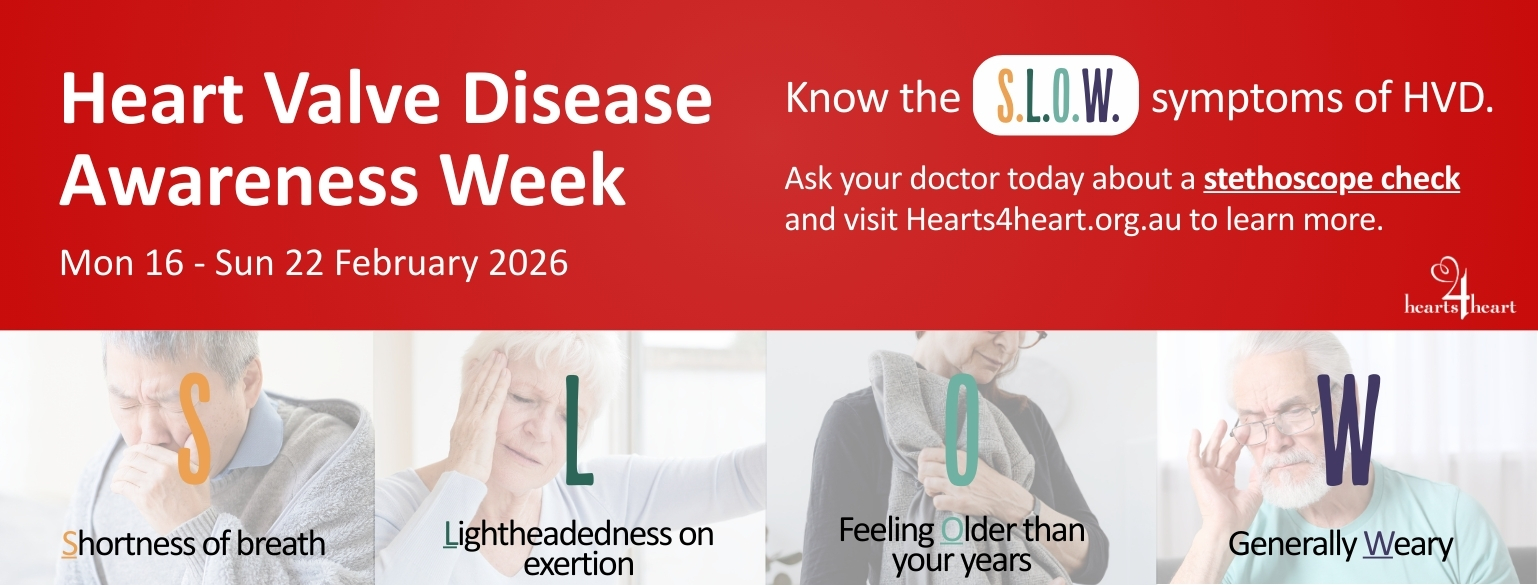
Australia’s response to heart valve disease is moving too slowly, putting hundreds of thousands of lives at risk. To help change that, we have launched Australia’s first ‘SLOW Symptoms’ campaign.
The SLOW Symptoms campaign aims to help Australians recognise the red-flag symptoms of heart valve disease and then seek early medical advice.
SLOW stands for:
The SLOW campaign was developed and first launched in the UK by Heart Valve Voice to raise greater awareness of heart valve disease.
In 2021, an estimated 600,000 Australians were living with diagnosed heart valve disease, with an estimated 250,000 more people unaware they had the condition, meaning an estimated 850,000 Australians may already be affected.1
Australian and global heart health advocates now warn heart valve disease is “the next cardiac epidemic”, driven by an ageing population and persistently low awareness. Global projections suggest the number of people living with heart valve disease will double by 2040 and triple by 2060.
Despite its growing prevalence, a persistently slow response to heart valve disease is sustaining low public understanding driving the tendency to misattribute symptoms as signs of ageing. This leads to delayed diagnosis, missed treatment opportunities and avoidable complications such as heart failure, stroke, arrhythmia and premature death.5
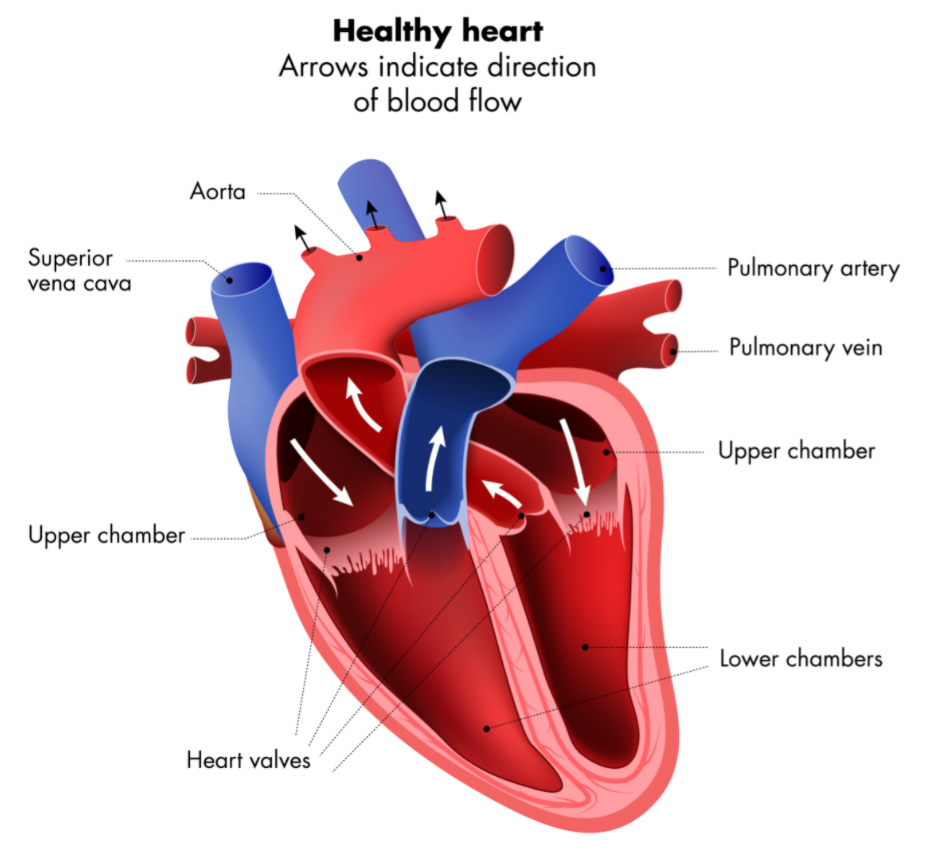
The heart valves play a critical role in ensuring adequate blood flow and transport of oxygen through the heart and body. Each day, the heart pumps about 7,500 litres of blood via a blood vessel system stretching more than 100,000km.1
Heart valve disease is a serious and common condition where one or more of the valves in the heart do not open or close properly, which can lead to problems with blood flow. Heart valve disease is caused by either wear, disease or damage of one or more of the heart’s valves, which affects the flow of blood through the heart. It can also be present from birth (congenital heart disease).
If left untreated, heart valve disease can damage the heart’s valves, leading to heart failure, stroke and arrhythmia (an irregular heartbeat).
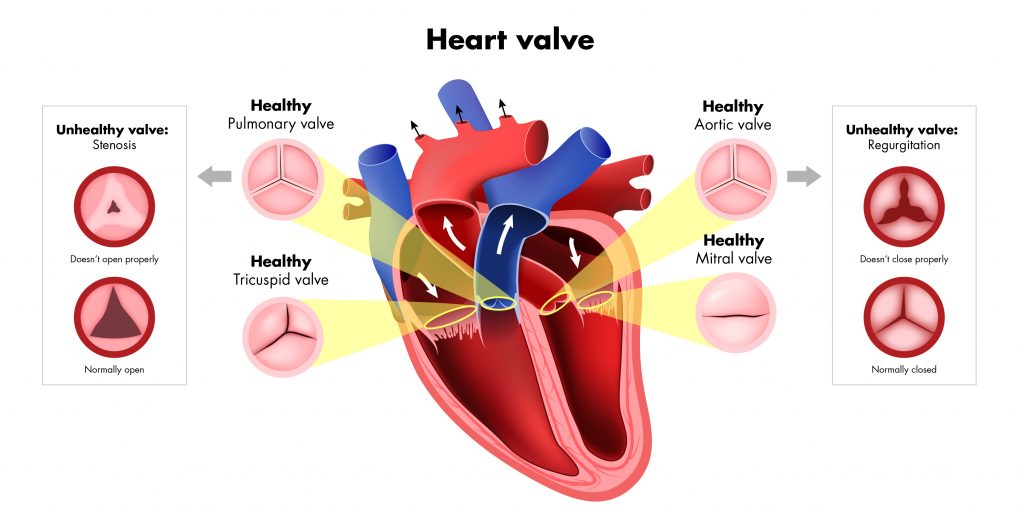
There are three potential problems that can be experienced with heart valves – narrowing, leaking or less commonly, absence or misshapen.
“Too many Australians are living with heart valve disease without knowing it, and by the time they do, it can be too late.” Tanya Hall, CEO and Founder, Hearts4heart
If detected early, heart valve disease can be effectively monitored and treated, significantly improving quality of life and survival. However, outcomes for people with untreated, severe disease are poor, with more than half of symptomatic patients with severe aortic stenosis dying within two years if left untreated.
“Heart valve disease is one of the most under-recognised and under-diagnosed heart conditions we see. Heart valve disease gets worse before symptoms develop, and early symptoms such as breathlessness may be ignored or assumed to be due to age or lack of fitness. A simple stethoscope check followed by an echocardiogram is the best way to diagnose heart valve disease. Earlier detection saves lives.” Professor David Playford, Professor of Cardiology at the University of Notre Dame
During February there are free heart screening events in Melbourne (VIC) and Perth (WA) to help Australians identify early warning signs and access timely specialist care.
| MELBOURNE SCREENING EVENT | |
|---|---|
| 26 February 2026 @ 10 am – 4pm | Veneto Club, 191 Bulleen Road, Bulleen |
| PERTH SCREENING EVENT | |
| 17 February 2026 @ 9am – 5pm | Hollywood Private Hospital, 115 Monash Avenue, Perth |
Click here to book your free heart screening.
Australians are encouraged to learn the SLOW symptoms, attend a free screening event if eligible, and speak to their GP about a stethoscope check, particularly if they are over 65 or experiencing unexplained breathlessness or fatigue.
We always appreciate people helping us spread the word. If you would like to get involved in future Hearts4heart campaigns, please email info@hearts4heart.org.au for more information.
Heart Valve Disease Awareness Week 2026 is proudly supported by Medtronic, Edwards Lifesciences, Abbott and Boston Scientific.


References: