Take time out of your busy day and make a Donation to an amazing cause. Shed some light on Heart Awareness
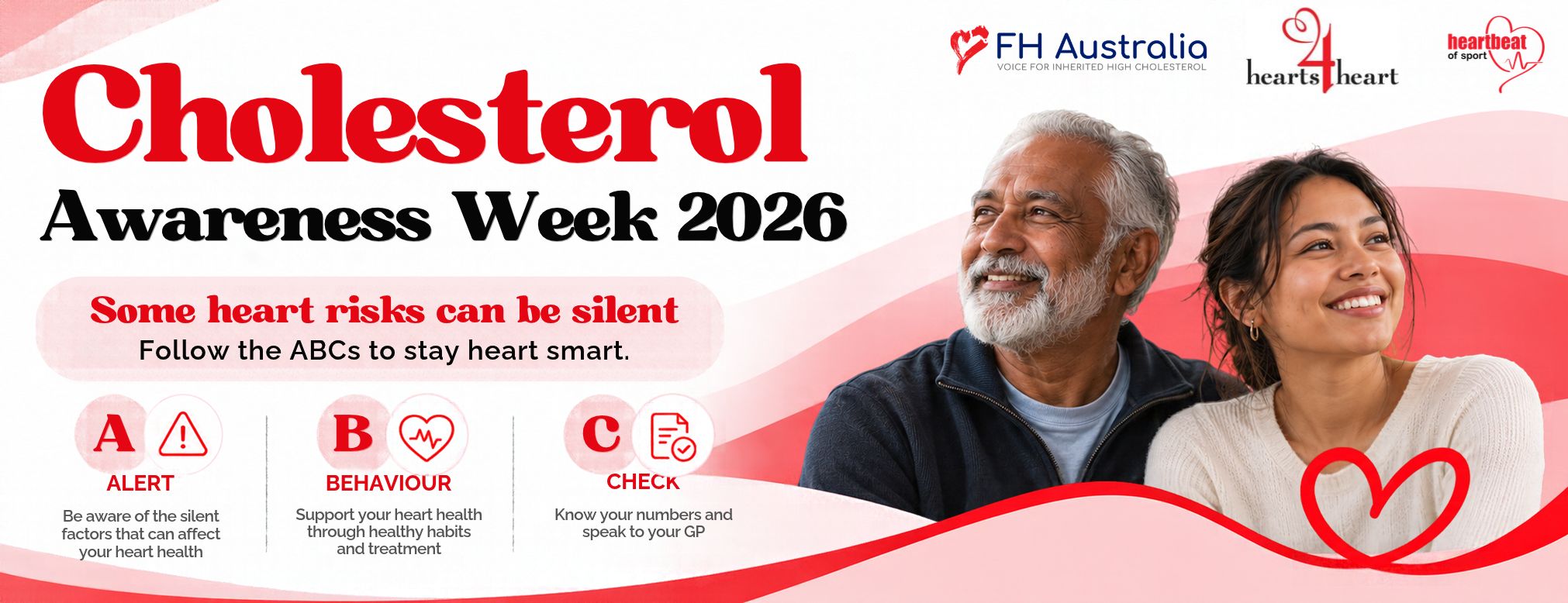
Cholesterol Awareness Week (23 – 29 November 2026) is a national initiative led by Hearts4heart, in partnership with Heartbeat of Sport and FH Australia.
This year, we’re taking Australians back to basics and challenging common myths about cholesterol, helping people understand their risk and encouraging everyone to know their cholesterol numbers.
High cholesterol can increase the risk of heart disease but often has no obvious symptoms.1,2 You can feel fit and healthy and still have high cholesterol, which is why knowing your numbers is an important step in understanding your heart health.1,2
New national research commissioned by Hearts4heart reveals that almost two in five Australians (39%) are unsure of their own cholesterol level despite knowing cholesterol can affect heart health.
Hearts4heart CEO and Founder, Tanya Hall, discusses the importance of cholesterol awareness.
Learn the ABCs of ASCVD
This Cholesterol Awareness Week, we are encouraging Australians to follow the ABCs of atherosclerotic cardiovascular disease (ASCVD). This is a simple framework to help you understand your risk, or the risk of those close to you, and take positive steps towards improving your heart health.
Alert: Be aware that high cholesterol can be silent and understand the factors that may affect your heart health.
Behaviour: Support your heart health through healthy lifestyle choices and follow any management or treatment plan recommended by your healthcare professional.
Check: Know your cholesterol numbers and speak with a healthcare professional about what they mean for you.
This Cholesterol Awareness Week, we’re challenging some common misconceptions about cholesterol.
MYTH |
FACT |
|
I feel healthy, so my cholesterol must be fine. |
High cholesterol often has no clear symptoms. You can feel healthy and still have high cholesterol.1,2 |
|
High cholesterol only affects people with an unhealthy lifestyle. |
Lifestyle can play a role, but genetics, family history, age and other health conditions can also affect cholesterol and cardiovascular risk.1,2,4 |
|
If I exercise and maintain a healthy weight, I don’t need to think about cholesterol. |
Being active and maintaining a healthy weight are important for heart health, but they do not rule out high cholesterol or other cardiovascular risk factors.1,2,4
|
|
Cholesterol is only something older people need to think about. |
The effects of high LDL-C can build over many years, while inherited conditions such as familial hypercholesterolemia can cause high cholesterol from birth.5,6
|
|
Once my cholesterol is under control, I don’t need to think about it again. |
Cholesterol may need ongoing monitoring and management. Always speak with your healthcare professional before changing or stopping prescribed treatment.2
|
|
Cholesterol is either good or bad. |
Cholesterol is essential for the body to function, but too much of certain types can contribute to plaque building up in the arteries.1,2 Understanding cholesterol means looking beyond a single number and considering a person’s overall cardiovascular risk.2,4 |
|
If I’m slim and fit, I don’t need to worry about high cholesterol. |
High cholesterol is not determined by body weight alone.1,2 Someone who is slim, physically active and appears healthy can still have high cholesterol. While obesity is an important cardiovascular risk factor, it is distinct from high cholesterol, and both should be considered when assessing heart health.4 |
|
If I see health advice on social media, I can apply it to my own circumstances. |
Health information shared online may only tell part of the story. What is relevant for one person may not apply to another, particularly when it comes to cholesterol and cardiovascular risk. Speaking with a healthcare professional can help people understand the full picture and what it means for their individual health. |
What is high cholesterol?
Cholesterol is a fatty substance that your body needs to function.1,2 However, too much of certain types of cholesterol in the blood can contribute to fatty deposits, known as plaque, building up inside the arteries and increasing cardiovascular risk.1,2
There are different types of cholesterol and fats in the blood, including:
High LDL-C is an important contributor to ASCVD, a condition that develops when fatty plaque builds up inside the arteries.1,2,5 Over time, this can narrow or block blood flow and contribute to heart attacks, strokes and other cardiovascular problems.1,2,5
The effects of elevated LDL-C can build up over many years, making it important to understand your cholesterol levels and overall cardiovascular risk.5
Learn more about cholesterol and ASCVD here.
High cholesterol usually has no obvious symptoms.1,2 This means you can feel healthy, exercise regularly and maintain a healthy weight without knowing your cholesterol level is high.1,2
Understanding these factors can help you have a more informed conversation with your GP or healthcare professional about your individual risk.
Familial hypercholesterolemia (FH) is an inherited condition that causes high cholesterol from birth.6
FH affects around one in 250 Australians. Because it is genetic, someone can follow a healthy lifestyle and still have very high cholesterol.6
A child of a parent with FH has a 50% chance of inheriting the condition, making family history an important clue when understanding cholesterol risk.6
Early identification and appropriate management can help reduce cardiovascular risk for people living with FH.6
How can you check your cholesterol?
Knowing your cholesterol numbers is an important step towards understanding and managing your heart health.
Your GP can arrange a blood test, often called a lipid profile or lipid panel, to measure your cholesterol and triglyceride levels. They can also explain what your results mean for you, taking into account your age, family history, existing health conditions and other cardiovascular risk factors.
For many Australians, a Heart Health Check with their GP is also an opportunity to understand their overall cardiovascular risk.7
People without known cardiovascular disease may be eligible for a Medicare-subsidised Heart Health Check from:7
Age 45 for the general population
Age 35 for people living with diabetes
Age 30 for Aboriginal and Torres Strait Islander peoples
Speak with your GP about your eligibility and how often you should have your cholesterol checked.
What’s on during Cholesterol Awareness Week?
As part of Cholesterol Awareness Week 2026, free community screening events will provide an opportunity for Australians to check their cholesterol and learn more about their heart health.
Perth: FH Australia is hosting a cholesterol screening event at Hollywood Hospital.
Date: Tuesday 24 November 2026
Time: 7am-1.30pm
Location: Hollywood Private Hospital, Entrance 2, 105 Monash Avenue, Perth
Sydney: Heartbeat of Sport is running a cholesterol screening event
Date: Friday 27 November 2026
Time: 5 – 9pm
Location: Canterbury Kia Friday Night Racing, Canterbury Park, King Street, Canterbury
Don’t put your heart health on hold. If you’re near a screening event, take the opportunity to learn your cholesterol numbers. Otherwise, speak with your GP about getting your cholesterol checked.




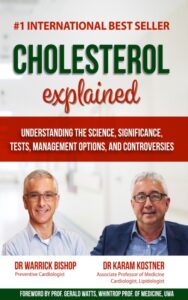
If you’d like to learn more about cholesterol, Dr Warrick Bishop has co-authored Cholesterol Explained which offers clear, compassionate, and science-based guidance to help readers understand cholesterol, interpret test results, and navigate treatment options – from medications to lifestyle changes – in a simple yet accurate way.

FH Australia is a not-for-profit organisation that was founded to advance health, by improving Australia-wide awareness, understanding and access to diagnosis and treatments for individuals and families with Familial Hypercholesterolaemia (FH). To find out more visit https://fhaustralia.org.au/

Heartbeat of Sport is a not-for-profit organisation promotes healthy hearts in sport, focused on reducing the number of cardiac events through proactive testing and the promotion of defibrillators at sporting grounds across Australia. To find out more visit https://heartbeatoffootball.com.au/


Hearts4heart is a proud partner of the Heart Foundation

References